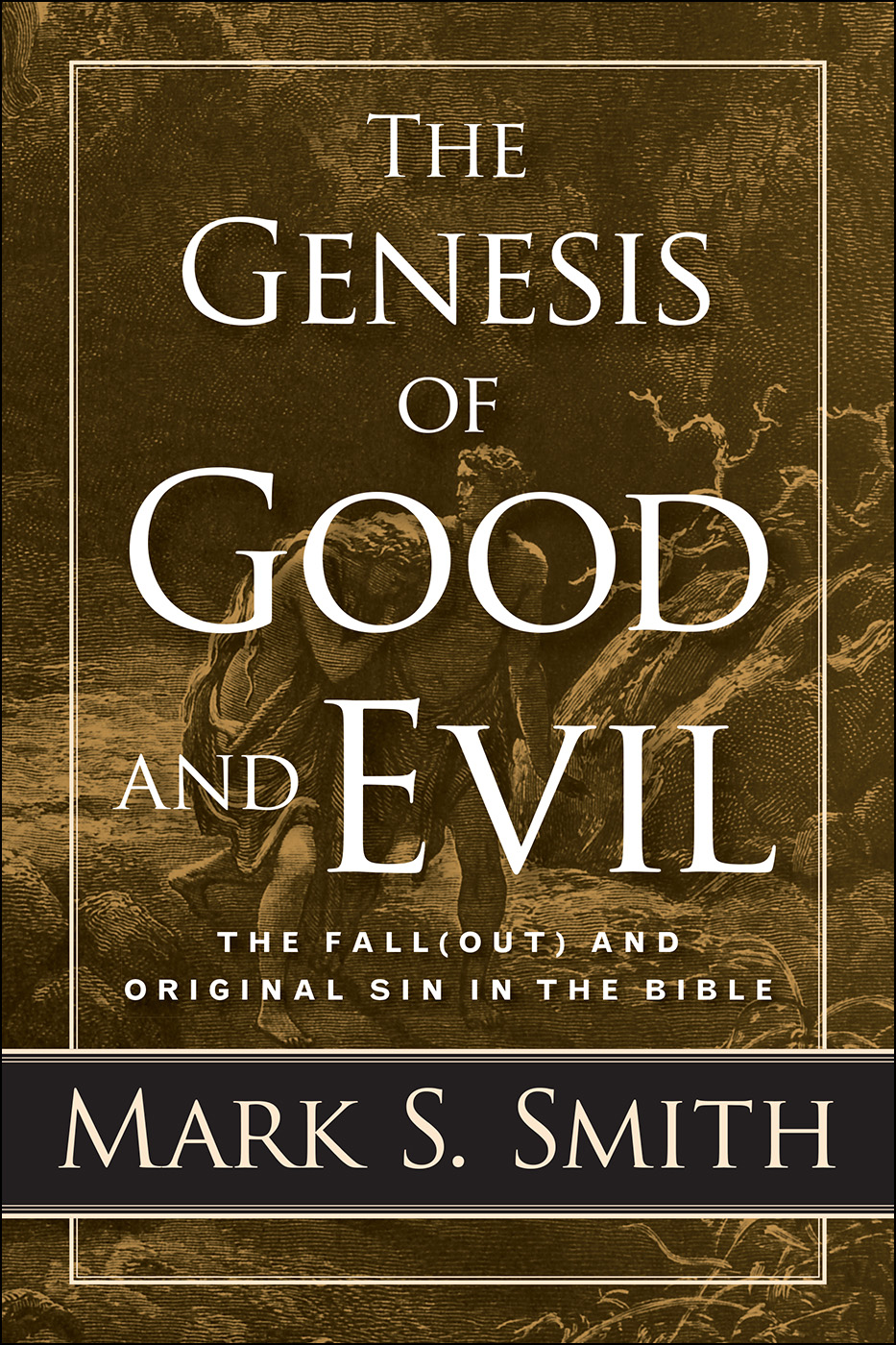
For centuries, the Garden of Eden story has been a cornerstone for the Christian doctrine of “the Fall” and “original sin.” In recent years, many scholars have disputed this understanding of Genesis 3 because it has no words for sin, transgression, disobedience, or punishment. Instead, it is about how the human condition came about. Yet the picture is not so simple. The Genesis of Good and Evil examines how the idea of “the Fall” developed in Jewish tradition on the eve of Christianity. In the end, the Garden of Eden is a rich study of humans in relation to God that leaves open many questions. One such question is, Does Genesis 3, 4, and 6, taken together, support the Christian doctrine of original sin? Smith’s well-informed, close reading of these chapters concludes that it does. In this book, he addresses the many mysterious matters of the Garden story and invites readers to explore questions of their own.
“Smith cuts through the miasma of the history of interpretation of Genesis 3 and ‘the Fall’ with his characteristically incisive clarity. As readers hear this classic text speak afresh, they will rethink their deepest assumptions about the human condition and God’s will for us.” —Jacqueline E. Lapsley, Dean and Vice President for Academic Affairs, Professor of Old Testament, Princeton Theological Seminary
 Mark S. Smith is Helena Professor of Old Testament Literature and Exegesis at Princeton Theological Seminary and Skirball Professor Emeritus of Hebrew Bible and Ancient Near Eastern Studies at New York University. He has also served as visiting professor at the Pontifical Biblical Institute in Rome and at the Hebrew University in Jerusalem. An award-winning author, Smith has written sixteen books, including The Early History of God: Yahweh and the Other Deities in Ancient Israel; The Origins of Biblical Monotheism: Israel’sPolytheistic Background and the Ugaritic Texts; God in Translation: Deities in Cross-Cultural Discourse in the Biblical World; How Human Is God? Seven Questions about God and Humanity in the Bible; and Where the Gods Are: Spatial Dimensions of Anthropomorphism in the Biblical World. His current research focuses on a commentary on the book of Judges, coauthored with archaeologist Elizabeth Bloch-Smith.