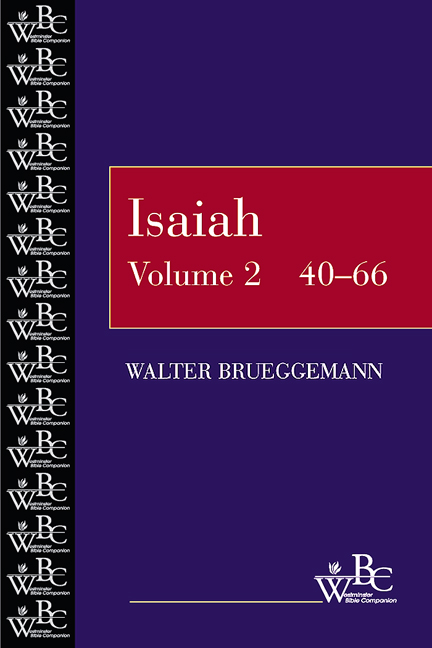
New and different readings of biblical texts are one consequence of a growing awareness of the environmental crisis and how it relates to social relations, especially in urban settings. Walter Brueggemann explores readings from Isaiah and how they relate to the environment and urban crisis. He approaches the readings as an artistic-theological history of the city of Jerusalem–a case study of urban environmental crisis that resulted from a lost sense of covenantal neighborliness. Reflecting on Jerusalem, its failure, demise, and prospect, Brueggemann uncovers some alarming parallels in today’s urban cities, and offers a demanding but hopeful challenge to faith.
 Walter Brueggemann was a beloved and prolific writer, astute biblical theologian and Old Testament scholar, and an ordained minister in the United Church of Christ. He was the author of dozens of books, including Sabbath as Resistance: Saying No to the Culture of Now, Interrupting Silence: God’s Command to Speak Out, and Truth and Hope: Essays for a Perilous Age. Often heralded as a prophetic voice in our time, Brueggemann constantly reminded readers of God’s covenantal love and God’s call to speak truth to power, to remember that grace abounds, and to loosen the bonds of injustice.